Sometimes, feeling overwhelmed is not just about having “too much going on.” Sometimes, your nervous system has learned to stay on high alert because it is trying to protect you.
This is often what people mean when they say they feel stuck in survival mode.
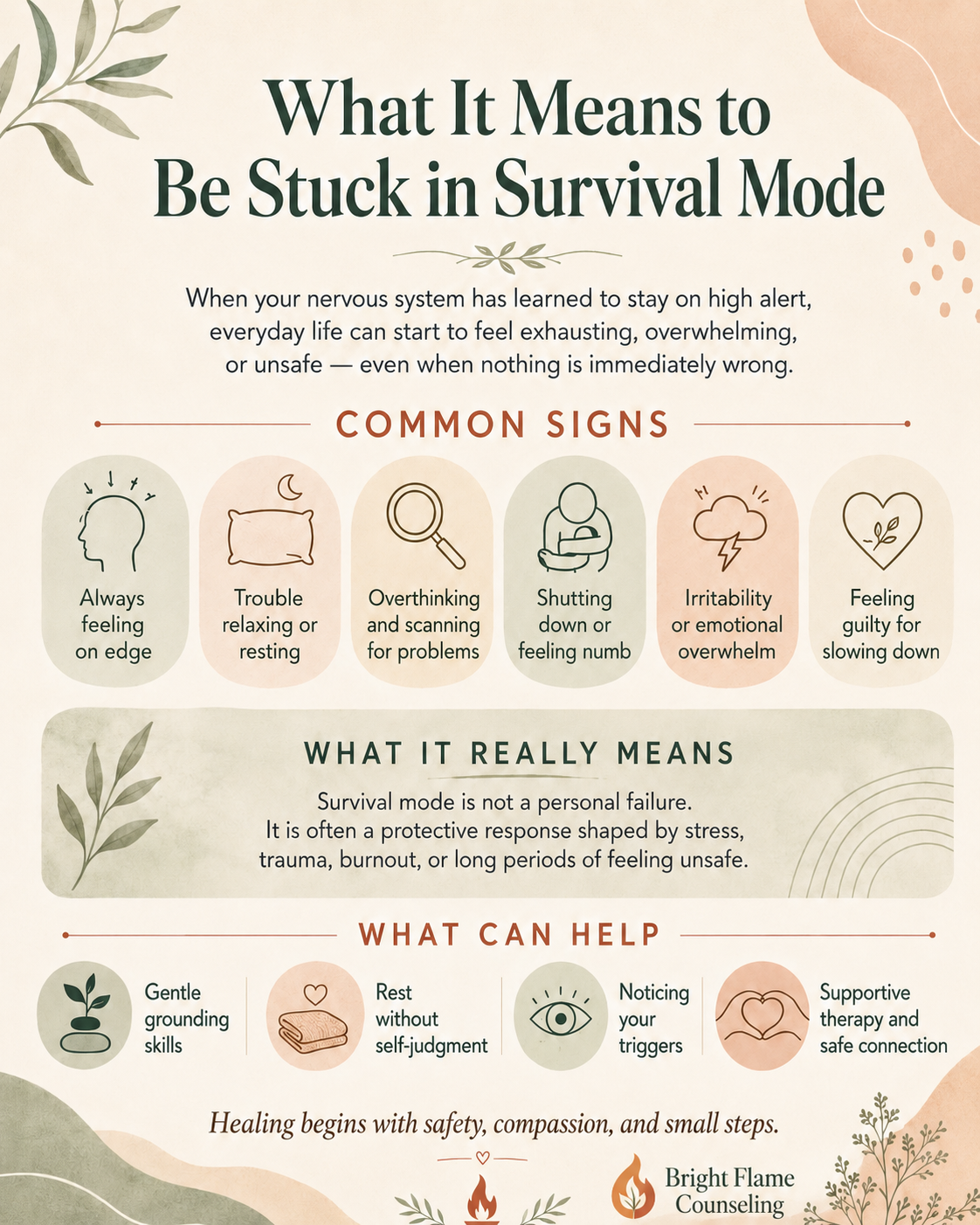
Survival mode can make everyday life feel exhausting, even when nothing is immediately wrong. You may find yourself overthinking, feeling tense, struggling to rest, shutting down, or reacting more intensely than you want to. These responses are not signs that you are broken. They are often signs that your body and mind have been carrying stress for a long time.
What Is Survival Mode?
Survival mode is the body’s protective response to stress, threat, trauma, burnout, or prolonged emotional overwhelm. When your nervous system senses danger, it may shift into patterns like fight, flight, freeze, or fawn.
These responses are meant to help you get through difficult or unsafe situations. The problem is that sometimes the body keeps using those responses even after the immediate danger has passed.
This can leave you feeling like you are always bracing for something bad to happen.
Common Signs You May Be Stuck in Survival Mode
Survival mode can look different for everyone, but some common signs include:
Feeling constantly on edge or easily startled.
Struggling to relax, even when you have time to rest.
Overthinking conversations, decisions, or possible problems.
Feeling emotionally numb, disconnected, or shut down.
Becoming irritable, defensive, or overwhelmed more quickly.
Feeling guilty when you slow down or take care of yourself.
Having difficulty sleeping or feeling rested.
Feeling like you have to “keep it together” all the time.
Scanning for signs that something is wrong.
Feeling exhausted, but unable to fully pause.
For some people, survival mode shows up as anxiety and urgency. For others, it may look like avoidance, numbness, procrastination, or feeling disconnected from themselves.
Why Survival Mode Happens
Survival mode often develops when your nervous system has had to adapt to ongoing stress or emotional unsafety. This may come from trauma, chronic stress, relationship instability, family conflict, burnout, grief, medical stress, financial pressure, or feeling like your needs were ignored for a long time.
Your body may have learned that staying alert helped you survive or avoid pain. Even if that response is no longer needed in the same way, your nervous system may still be trying to protect you.
That is why telling yourself to “just calm down” usually does not work. Survival mode is not simply a mindset issue. It is a nervous system response.
Survival Mode Is Not a Personal Failure
One of the most important things to understand is that survival mode is not a weakness or character flaw.
You are not being dramatic.
You are not lazy.
You are not “too sensitive.”
You are not failing because you feel overwhelmed.
Your nervous system may be doing exactly what it learned to do in order to help you get through difficult things. The goal is not to shame yourself out of survival mode. The goal is to gently teach your body that safety, rest, and connection are possible again.
What Can Help You Move Out of Survival Mode?
Healing from survival mode usually happens through small, consistent experiences of safety. This does not mean forcing yourself to relax or pretending everything is fine. It means slowly helping your body recognize that you do not have to stay on high alert all the time.
Some supportive steps may include:
1. Practice Grounding Skills
Grounding can help bring your attention back to the present moment. This may include noticing your feet on the floor, naming five things you can see, slowing your breathing, holding something comforting, or using temperature, sound, or movement to reconnect with your body.
The goal is not to erase your emotions. The goal is to remind your nervous system, “I am here. I am safe enough in this moment.”
2. Rest Without Judging Yourself
When you are used to being in survival mode, rest can feel uncomfortable or even unsafe. You may feel guilty, restless, or like you should be doing something more productive.
Start small. Rest does not have to mean doing nothing for an entire day. It might mean taking five quiet minutes, eating without multitasking, going outside for fresh air, or letting yourself pause before responding to everything.
Rest is not something you have to earn. It is something your body needs.
3. Notice Your Triggers With Compassion
Triggers are not always obvious. Sometimes your body reacts to tone of voice, conflict, uncertainty, silence, rejection, pressure, or feeling misunderstood.
Instead of asking, “What is wrong with me?” try asking, “What did this remind my nervous system of?”
That shift can help you respond with more curiosity and less shame.
4. Build Safe Connection
Survival mode often softens when you have safe, supportive relationships where you do not have to perform, overexplain, or hide what you are feeling.
This may include trusted friends, family members, support groups, or therapy. Safe connection can help your nervous system learn that you do not have to carry everything alone.
5. Consider Therapy for Deeper Support
If survival mode is interfering with your relationships, work, sleep, self-worth, or ability to feel present, therapy can help.
A trauma-informed therapist can support you in understanding your nervous system, identifying patterns, building coping skills, and creating more emotional safety in your life. Therapy is not about judging how you survived. It is about helping you feel less trapped in survival responses that no longer serve you.
You Deserve to Feel Safe in Your Own Life
Being stuck in survival mode can feel lonely and exhausting, but it does not mean you are beyond help. Your body learned how to protect you, and with support, it can also learn how to feel safe again.
Healing often begins with small steps: noticing what is happening, offering yourself compassion, practicing grounding, and allowing yourself to receive support.
You do not have to force yourself to be okay. You can begin by gently reminding yourself that you are allowed to slow down, feel supported, and take up space in your own life.
Bright Flame Counseling offers compassionate, trauma-informed therapy for individuals who are navigating anxiety, stress, trauma responses, relationship patterns, and emotional overwhelm. If you feel stuck in survival mode, support is available.
Wanting to learn more? Check out this educational video that helps to explain our trauma responses in under 6 minutes.
Disclaimer: This post is intended for general educational purposes and should not replace therapy, diagnosis, medical care, legal advice, or individualized treatment. Mental health information and best practices can change over time, so we encourage readers to consult with a qualified professional for the most current guidance and support specific to their situation. If you are experiencing a crisis or emergency, please call 988, 911, or visit the nearest emergency room.