When people hear the word “trauma,” they often think of a specific event. But trauma can also show up in the way our nervous system learns to protect us after overwhelming, unsafe, or painful experiences.
A trauma response is the body and mind’s attempt to stay safe. These responses are not signs of weakness or failure. They are survival strategies that may have helped at one point, even if they no longer feel helpful now.
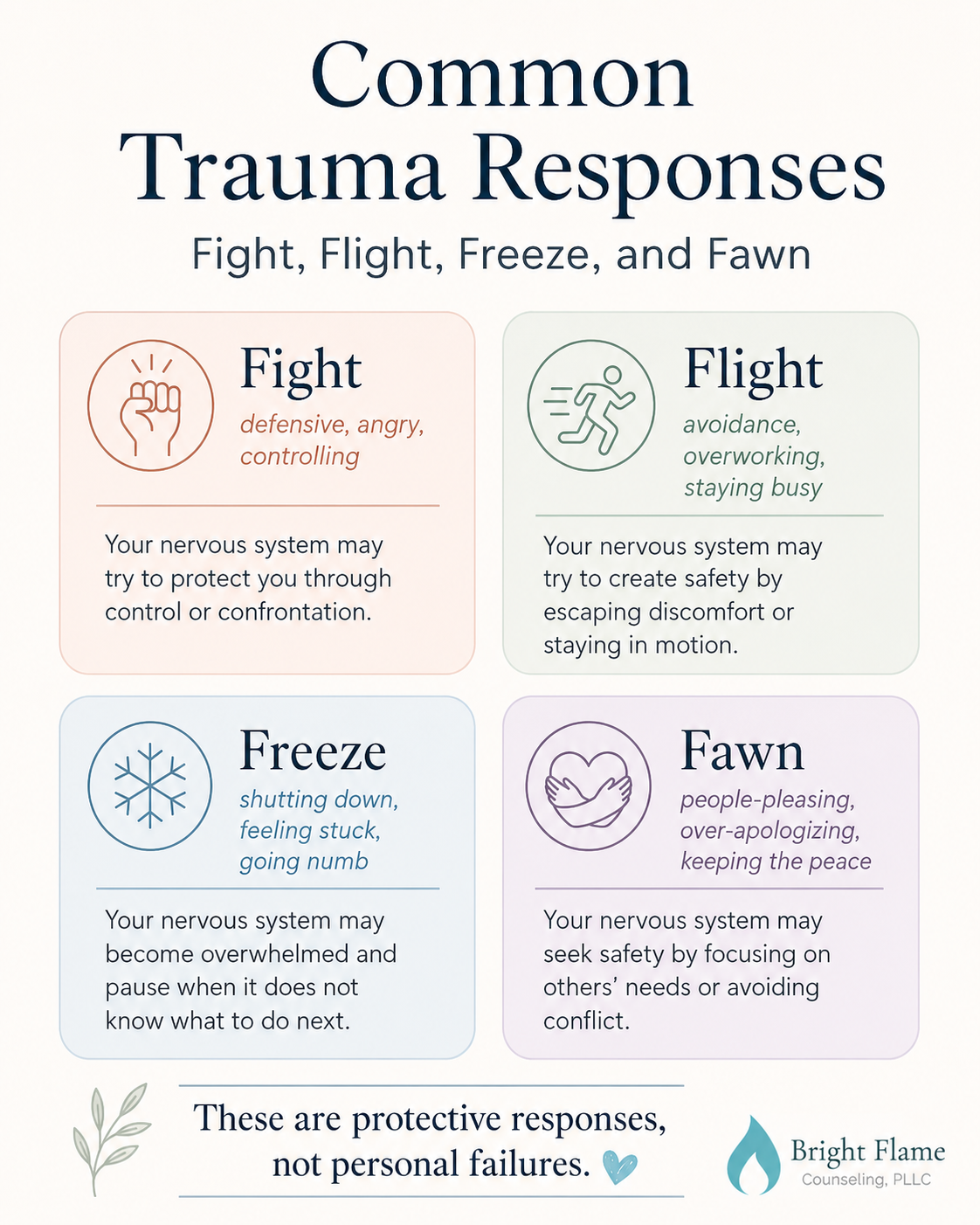
Four common trauma responses are fight, flight, freeze, and fawn.
Fight may look like becoming defensive, angry, controlling, or ready to argue. Underneath, the nervous system may be trying to create safety through protection or control.
Flight may look like avoiding, staying busy, overworking, leaving situations quickly, or feeling unable to slow down. This response often says, “I need to get away from this feeling.”
Freeze may look like shutting down, going numb, feeling stuck, dissociating, or struggling to speak or make decisions. Freeze can happen when the nervous system feels overwhelmed and does not know what action to take.
Fawn may look like people-pleasing, apologizing often, agreeing when you do not want to, or focusing on keeping others calm. This response often develops when connection, approval, or avoiding conflict once felt necessary for safety.
One way to understand trauma responses is to think of them as an internal alarm system. The alarm is trying to protect you, but sometimes it goes off even when you are not in immediate danger. Therapy can help you learn how to notice the alarm, understand what it is responding to, and build new ways to feel safe in your body and relationships.
In treatment, approaches like trauma-informed therapy, CBT, DBT, ACT, mindfulness, and somatic grounding skills can support clients in recognizing patterns, regulating emotions, setting boundaries, and reconnecting with choice.
Healing does not mean blaming yourself for how you learned to survive. It means gently learning new ways to respond, relate, and feel safe in the present.
Wanting to learn more? Check out this educational video that helps to explain our trauma responses in under 6 minutes.
Disclaimer: This post is intended for general educational purposes and should not replace therapy, diagnosis, medical care, legal advice, or individualized treatment. Mental health information and best practices can change over time, so we encourage readers to consult with a qualified professional for the most current guidance and support specific to their situation. If you are experiencing a crisis or emergency, please call 988, 911, or visit the nearest emergency room.