Setting boundaries can feel uncomfortable, especially if you are used to people-pleasing, avoiding conflict, or feeling responsible for other people’s emotions. Many people worry that boundaries will make them seem selfish, harsh, or uncaring.
In reality, healthy boundaries are not about pushing people away. They are about protecting your time, energy, values, and emotional well-being so your relationships can become more honest and sustainable.
A boundary is a clear statement about what you can do, what you cannot do, or what you need in order to feel safe and respected. Boundaries can show up in many areas of life, including family, friendships, work, romantic relationships, and even your relationship with yourself.
One way to think about boundaries is like a fence with a gate. The goal is not to build a wall around yourself. The goal is to decide what gets access to your time, body, emotions, and energy — and what does not.
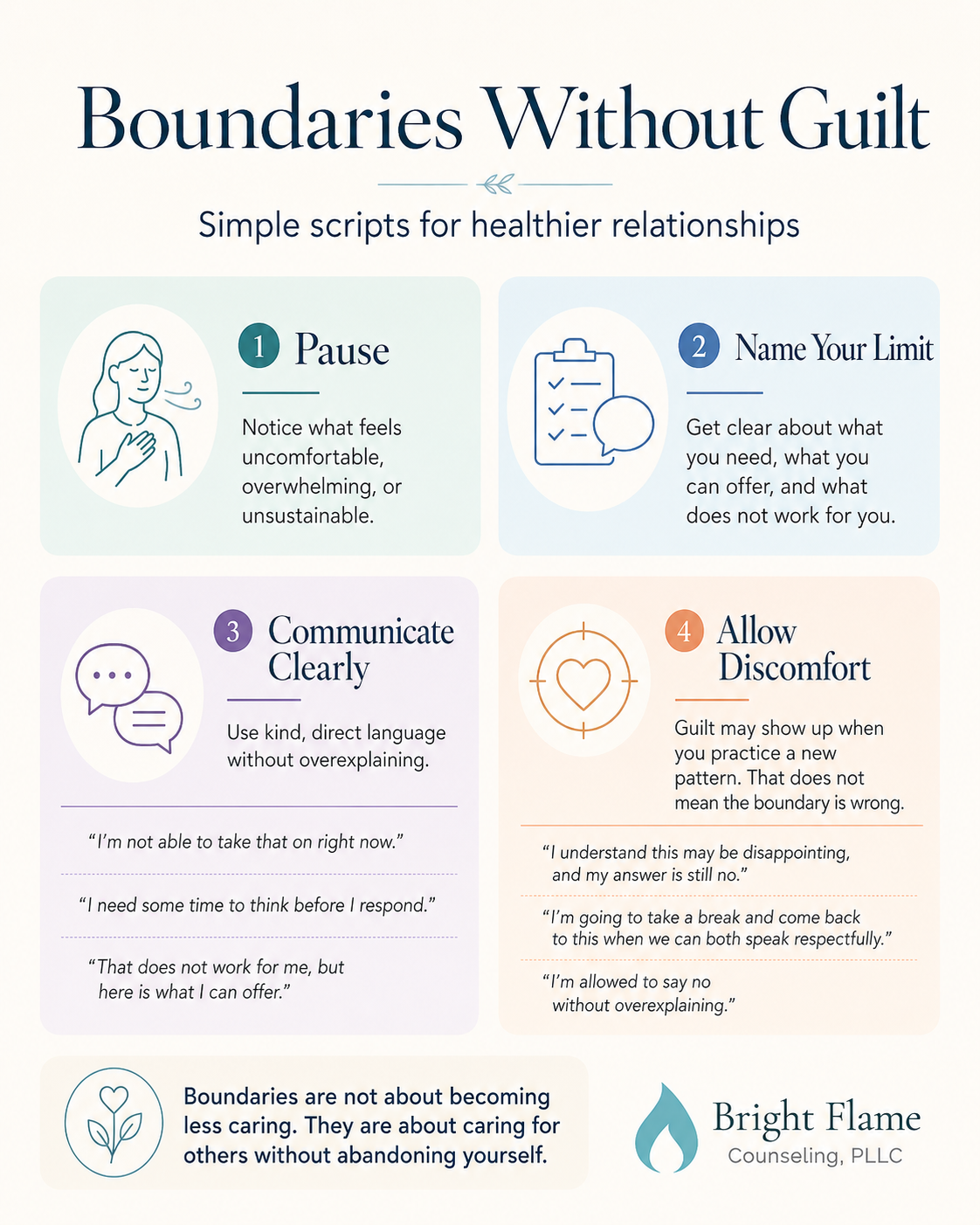
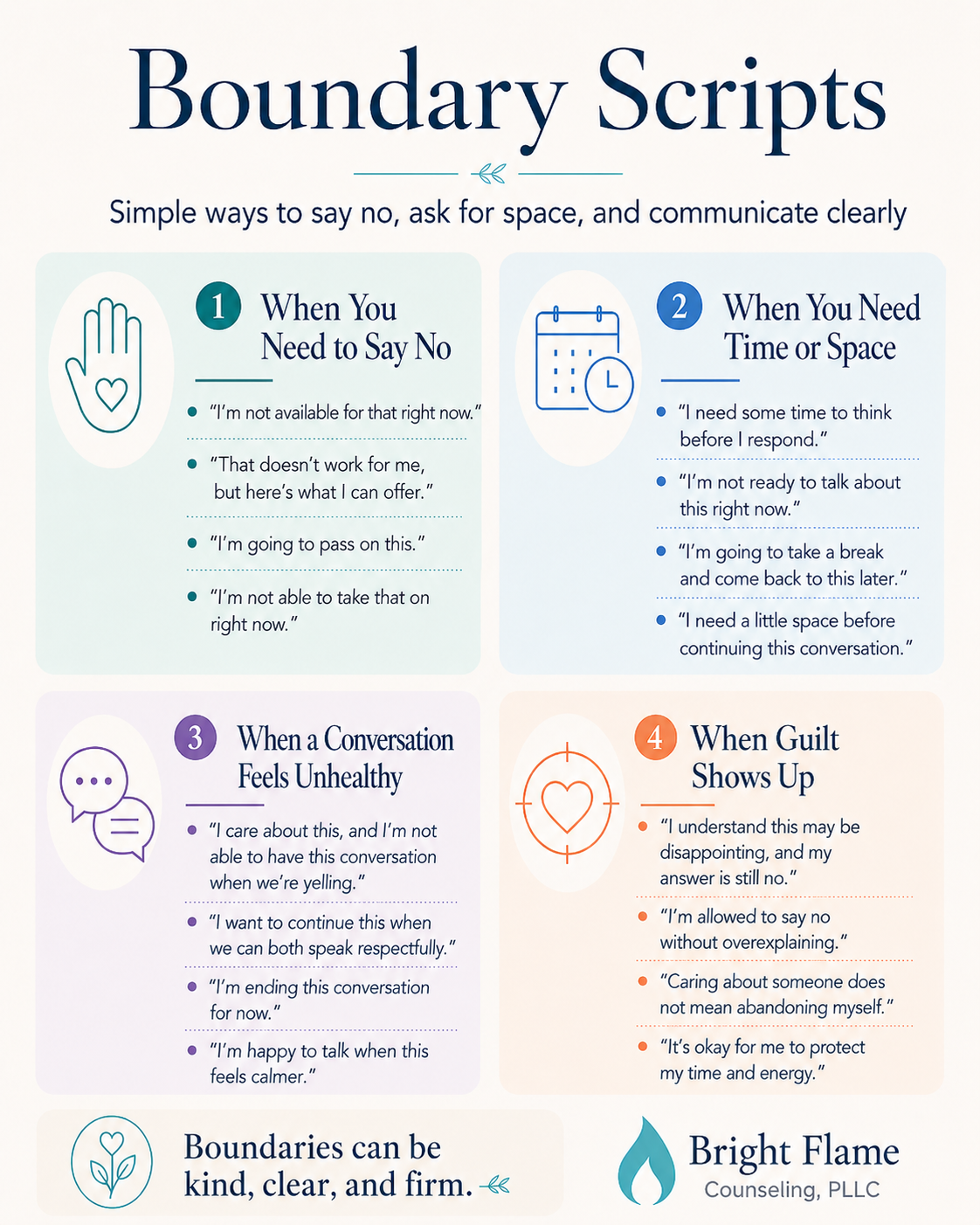
Here are a few simple boundary scripts:
“I’m not available for that, but I hope you’re able to find support.”
“I need some time to think before I respond.”
“I care about you, and I’m not able to have this conversation when we’re yelling.”
“That does not work for me, but here is what I can offer.”
“I’m allowed to say no without overexplaining.”
Guilt may still show up after setting a boundary, especially if this is new for you. That does not automatically mean the boundary was wrong. Sometimes guilt is simply a sign that you are practicing a new pattern.
Therapy can help clients understand where boundary struggles come from, identify patterns of people-pleasing or avoidance, and practice communication that is both compassionate and clear. Approaches like CBT, DBT, ACT, and person-centered therapy can support clients in building self-trust, emotional regulation, and healthier relationship patterns.
Boundaries are not about becoming less caring. They are about learning to care for others without abandoning yourself.
Want to learn more? Here is an educational video explaining more in depth in under 7 minutes.
Disclaimer: This post is intended for general educational purposes and should not replace therapy, diagnosis, medical care, legal advice, or individualized treatment. Mental health information and best practices can change over time, so we encourage readers to consult with a qualified professional for the most current guidance and support specific to their situation. If you are experiencing a crisis or emergency, please call 988, 911, or visit the nearest emergency room.