Many people describe anxiety and intuition in similar ways: a gut feeling, a sense that something is wrong, or a strong urge to act. Because both can feel intense in the body, it can be hard to know whether you are sensing something important or reacting from fear.
The difference is not always simple, but learning to pause and get curious can help.
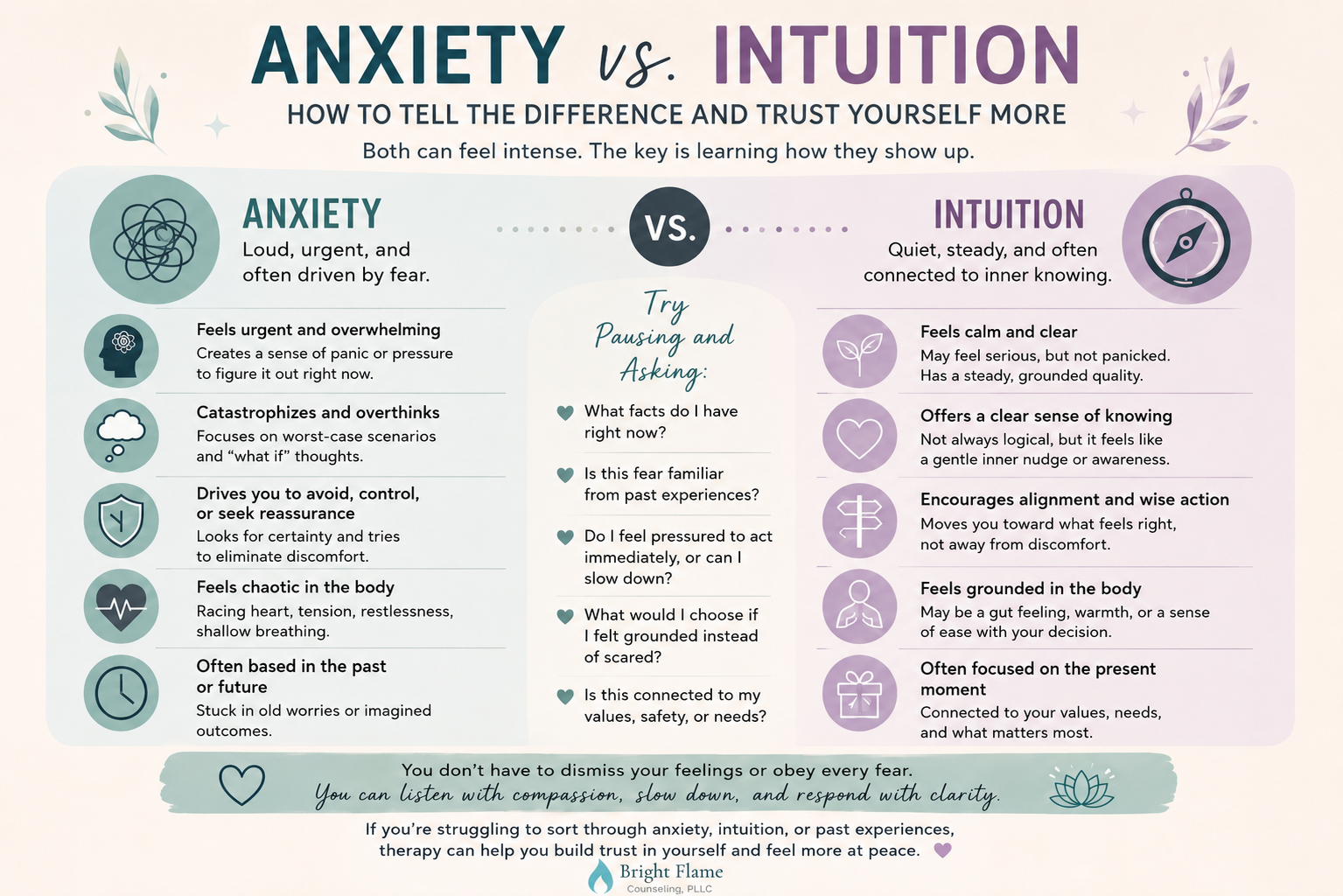
Anxiety often feels urgent, loud, and repetitive. It may come with racing thoughts, worst-case scenarios, tension in the body, or a strong need to get certainty right away. Anxiety usually asks, “What if something bad happens?” and may push you toward overthinking, avoiding, checking, or seeking reassurance.
Intuition often feels quieter and steadier. It may still feel serious, but it usually does not demand panic. Intuition tends to feel more like a clear inner knowing, a grounded sense of concern, or a gentle signal that something deserves attention.
One way to think about the difference is that anxiety is like a smoke alarm that may go off even when you only burned toast. It is trying to protect you, but it may not always match the level of actual danger. Intuition is more like a compass. It points you toward what needs attention without necessarily flooding your whole system.
A helpful question to ask is: “Is this feeling asking me to respond, or is it asking me to panic?”
You can also pause and ask:
What facts do I actually have right now?
Is this fear familiar from past experiences?
Do I feel pressured to act immediately, or can I slow down?
What would I choose if I felt grounded instead of scared?
Is this connected to my values, safety, or needs?
For example, anxiety might say, “They did not text back, so they must be upset with me.” Intuition might say, “Something feels off in this relationship, and I want to pay attention to that pattern.” Anxiety often jumps to conclusions quickly. Intuition usually becomes clearer when you slow down and look at the bigger picture.
Therapy can help you learn the difference between anxiety, trauma responses, body cues, and values-based inner knowing. Approaches like CBT, DBT, ACT, and mindfulness can support you in checking the facts, regulating your nervous system, and rebuilding trust in yourself.
You do not have to dismiss your feelings or obey every fear. You can learn to listen with compassion, slow the moment down, and respond with more clarity.
Wanting to learn more? Check out this educational video that helps to explain our trauma responses in under 6 minutes.
Disclaimer: This post is intended for general educational purposes and should not replace therapy, diagnosis, medical care, legal advice, or individualized treatment. Mental health information and best practices can change over time, so we encourage readers to consult with a qualified professional for the most current guidance and support specific to their situation. If you are experiencing a crisis or emergency, please call 988, 911, or visit the nearest emergency room.