Have you ever left a conversation and immediately started replaying every detail?
Maybe you wonder if you said the wrong thing, talked too much, sounded awkward, or upset someone. You may keep thinking, “Why did I say that?” or “What if they misunderstood me?”
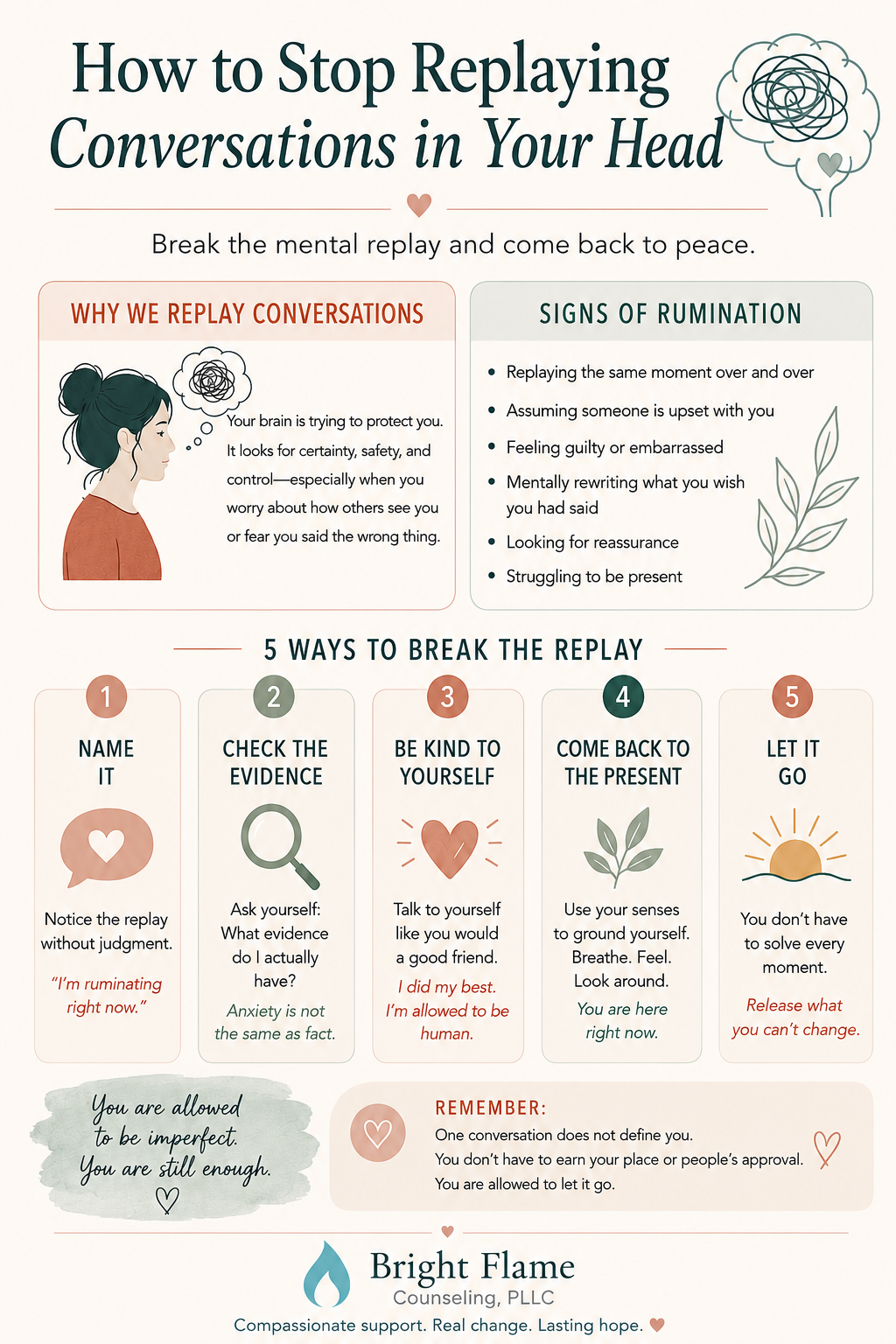
Replaying conversations is common, especially for people who struggle with anxiety, people-pleasing, fear of conflict, or past experiences of feeling judged or unsafe.
Why Do I Replay Conversations?
Replaying conversations is often your brain’s attempt to find certainty or control.
When an interaction feels uncomfortable, your mind may try to review every detail to make sure you are safe, accepted, or not in trouble. This can feel helpful at first, but it often turns into rumination.
Rumination is when your thoughts loop without bringing relief or clarity.
Common Signs of Rumination
You may be stuck in rumination if you:
Keep replaying the same moment over and over.
Assume someone is upset without clear evidence.
Feel guilty or embarrassed after normal conversations.
Mentally rewrite what you wish you had said.
Ask for reassurance but only feel better briefly.
Struggle to be present after social interactions.
Rumination can be exhausting because your brain is trying to solve something that may not actually need solving.
Why It Feels So Hard to Stop
If you have learned to monitor other people’s moods, avoid conflict, or keep others happy, overanalyzing conversations may have become a protective habit.
Your nervous system may be scanning for signs of rejection, disappointment, or danger. This does not mean you are “too sensitive.” It means your mind and body may be trying to protect you.
How to Stop Replaying Conversations
1. Name What Is Happening
Try saying:
“I am ruminating right now.”
“My brain is looking for certainty.”
“I do not have to solve this moment again.”
Naming the pattern can help create distance from the thought spiral.
2. Ask: Is This Helpful or Hurtful?
Reflection helps you learn. Rumination keeps you stuck.
Ask yourself:
“Am I gaining clarity, or am I making myself feel worse?”
“Is there an action I need to take?”
“Have I already thought about this enough?”
If there is no clear action, it may be time to gently redirect.
3. Check the Evidence
Anxiety often assumes the worst.
Ask:
“What evidence do I actually have?”
“Is there another possible explanation?”
“Would I judge someone else this harshly?”
Anxiety is not the same as proof.
4. Use a Self-Compassionate Reframe
Instead of “I sounded so awkward,” try:
“I was doing my best.”
“One imperfect moment does not define me.”
“I am allowed to be human in conversations.”
Self-compassion helps quiet shame without forcing positivity.
5. Come Back to the Present
Rumination pulls you into the past. Grounding brings you back to now.
Try pressing your feet into the floor, naming five things you see, taking a slow breath, stepping outside, or relaxing your jaw and shoulders.
When Therapy Can Help
If you often replay conversations, fear people are upset with you, or feel stuck in self-criticism, therapy can help.
Therapy can support you in understanding anxiety, building self-trust, practicing communication skills, and responding to rumination with more compassion.
You Are Allowed to Stop Putting Yourself on Trial
Replaying conversations does not mean something is wrong with you. It often means your mind is trying to protect you from rejection, conflict, or uncertainty.
But you do not have to keep reviewing every word as evidence against yourself.
You are allowed to be imperfect.
You are allowed to be misunderstood sometimes.
You are allowed to let a conversation be over.
Wanting to learn more? Check out this educational video reviewing how to stop ruminating in under 8 minutes.
Disclaimer: This post is intended for general educational purposes and should not replace therapy, diagnosis, medical care, legal advice, or individualized treatment. Mental health information and best practices can change over time, so we encourage readers to consult with a qualified professional for the most current guidance and support specific to their situation. If you are experiencing a crisis or emergency, please call 988, 911, or visit the nearest emergency room.