Dialectical Behavior Therapy, often called DBT, is an evidence-based therapy approach that helps people better understand and manage intense emotions, relationship stress, impulsive reactions, and moments of overwhelm.
At its core, DBT is about balance. The word “dialectical” means holding two things at the same time. In therapy, this often looks like learning to accept yourself as you are while also working toward meaningful change. DBT does not frame clients as “too emotional” or “difficult.” Instead, it recognizes that many people have learned to survive painful experiences the best way they could, and sometimes those survival strategies stop working over time.
DBT is commonly used to support people experiencing anxiety, depression, trauma responses, mood shifts, relationship conflict, self-harm urges, suicidal thoughts, emotional dysregulation, and patterns of feeling overwhelmed or disconnected. It can also be helpful for anyone who wants practical tools for coping, communication, and self-understanding.
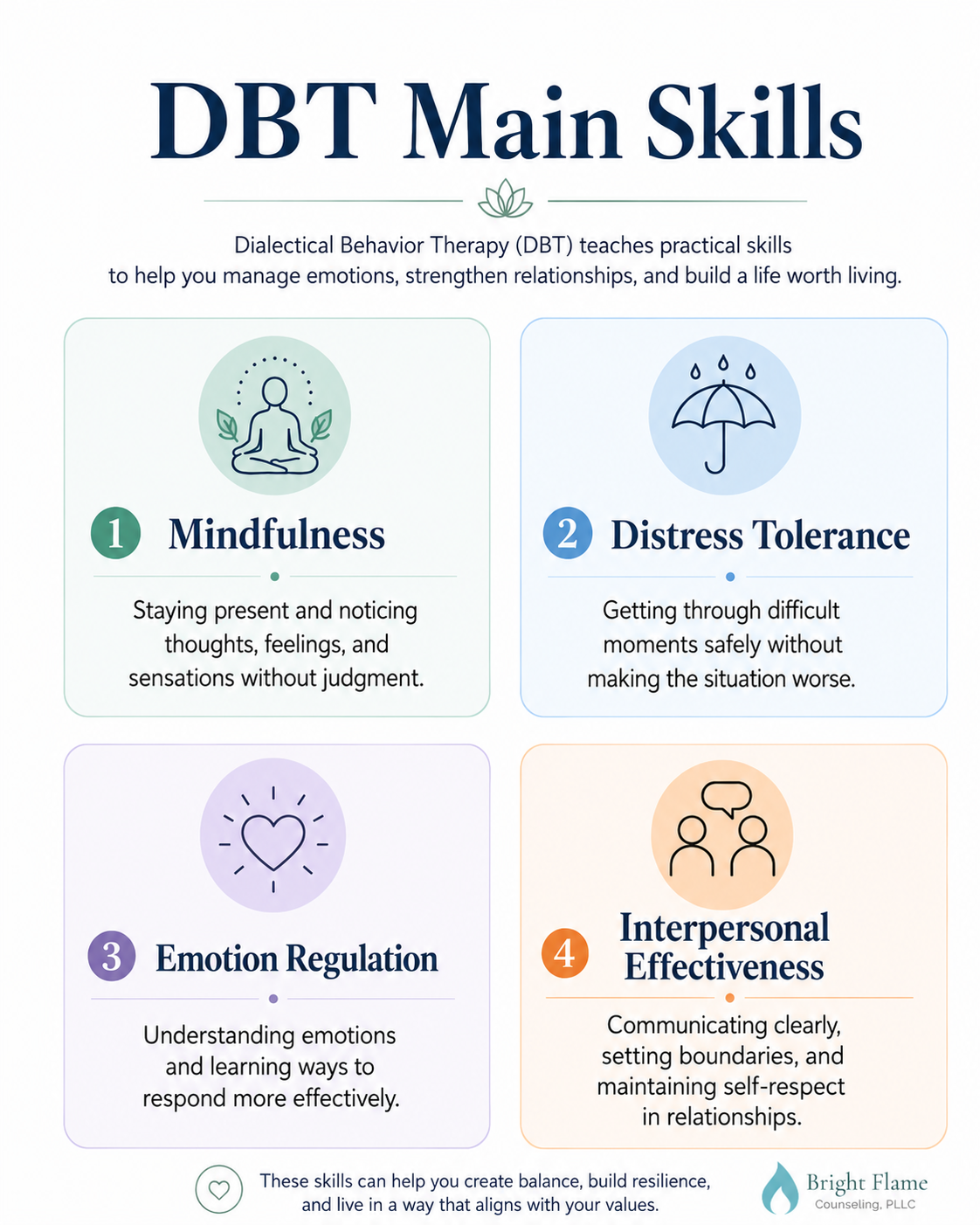
DBT focuses on four main skill areas:
Mindfulness helps clients slow down, notice what they are feeling, and stay more present in the moment.
Distress tolerance teaches ways to get through painful moments without making the situation worse.
Emotion regulation supports clients in understanding emotions, reducing vulnerability to emotional spirals, and responding with more intention.
Interpersonal effectiveness focuses on communication, boundaries, self-respect, and navigating relationships more clearly.
In treatment, DBT skills may be used alongside talk therapy, reflection, and problem-solving. A therapist might help a client identify patterns, practice grounding skills, explore triggers, build a safety plan, or learn how to pause before reacting. Over time, DBT can help clients feel more capable of managing difficult moments without losing connection to themselves or their values.
DBT is not about becoming emotionless or “fixing” who you are. It is about learning how to care for yourself with more awareness, compassion, and choice.
Disclaimer: This post is intended for general educational purposes and should not replace therapy, diagnosis, medical care, legal advice, or individualized treatment. Mental health information and best practices can change over time, so we encourage readers to consult with a qualified professional for the most current guidance and support specific to their situation. If you are experiencing a crisis or emergency, please call 988, 911, or visit the nearest emergency room.