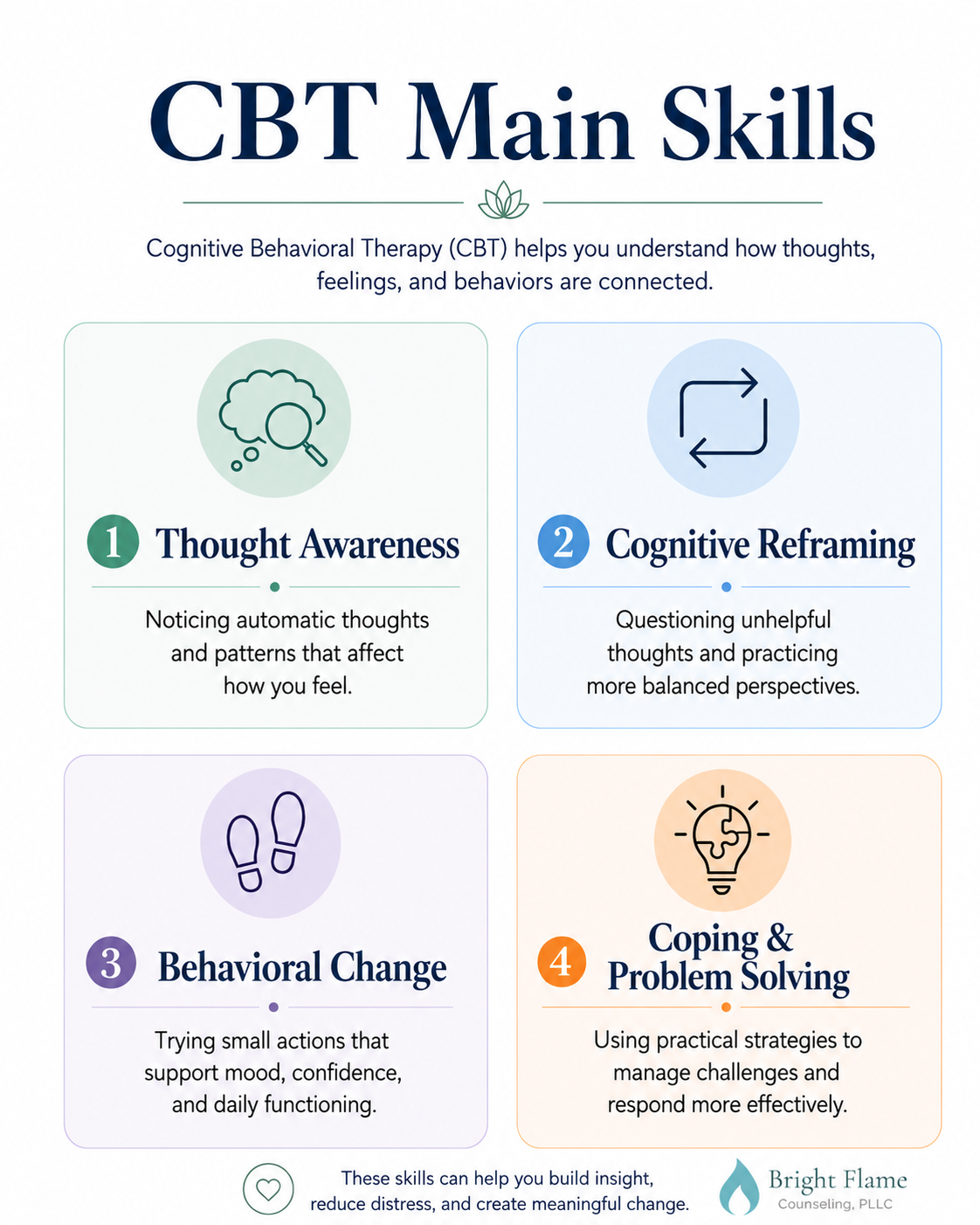
Cognitive Behavioral Therapy, often called CBT, is an evidence-based therapy approach that helps people understand the connection between their thoughts, emotions, body responses, and behaviors.
CBT is based on the idea that the way we interpret a situation can influence how we feel and respond. This does not mean our thoughts are “wrong” or that we should force ourselves to think positively. Instead, CBT helps us slow down, notice patterns, and ask whether a thought is helpful, accurate, or shaped by stress, fear, trauma, or past experiences.
One way to think about CBT is like wearing a pair of glasses. If the lenses are scratched, tinted, or shaped by painful experiences, we may see situations through fear, shame, or self-criticism. CBT helps us gently clean the lenses so we can view ourselves and our experiences with more clarity.
For example, if someone texts a friend and does not hear back, they may think, “They are mad at me” or “I did something wrong.” That thought might lead to anxiety, sadness, over-apologizing, or withdrawing. In CBT, we might pause and explore other possibilities: “They may be busy,” “I do not have enough information yet,” or “I can check in without assuming the worst.”
CBT can be helpful for anxiety, depression, trauma-related beliefs, low self-esteem, stress, relationship concerns, and patterns of overthinking. In therapy, CBT may include identifying thought patterns, challenging self-critical beliefs, practicing coping skills, setting realistic goals, and trying new behaviors outside of session.
CBT is not about ignoring pain or pretending everything is okay. It is about building awareness, creating more balanced thoughts, and choosing responses that support your well-being.
Wanting to learn more? Here is an educational video explaining CBT in under 5 minutes.
Disclaimer: This post is intended for general educational purposes and should not replace therapy, diagnosis, medical care, legal advice, or individualized treatment. Mental health information and best practices can change over time, so we encourage readers to consult with a qualified professional for the most current guidance and support specific to their situation. If you are experiencing a crisis or emergency, please call 988, 911, or visit the nearest emergency room.