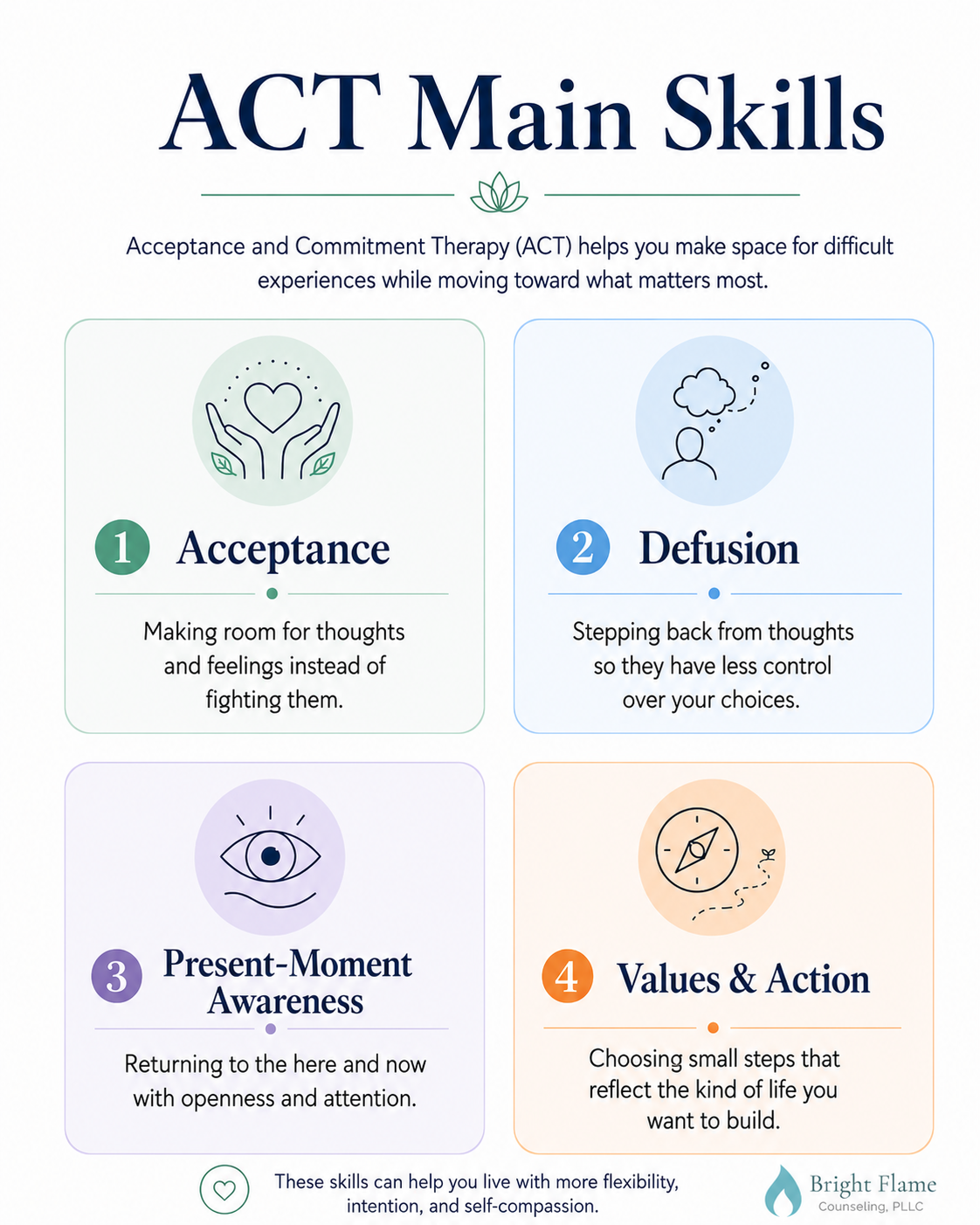
Acceptance and Commitment Therapy, often called ACT, is an evidence-based therapy approach that helps people relate differently to painful thoughts, emotions, and experiences. Rather than focusing on getting rid of every uncomfortable feeling, ACT supports clients in building a more flexible relationship with their inner world.
ACT is based on the idea that pain is a natural part of being human, but struggling against that pain can sometimes make suffering stronger. In therapy, this might look like learning how to notice difficult thoughts without letting them fully control your choices.
One way to think about ACT is like carrying a heavy backpack. The backpack may hold stress, grief, fear, shame, trauma, or painful memories. ACT does not pretend the backpack is not there, and it does not shame you for feeling its weight. Instead, ACT helps you learn how to carry it differently, so it does not stop you from moving toward the life you want.
A major part of ACT is identifying your values — the qualities, relationships, and choices that matter most to you. Values might include connection, honesty, creativity, independence, compassion, growth, or stability. Once those values are clearer, therapy can help you take small, meaningful steps toward them, even when anxiety, sadness, or self-doubt shows up.
ACT can be helpful for anxiety, depression, trauma responses, chronic pain, grief, life transitions, relationship stress, and patterns of avoidance. In treatment, ACT may include mindfulness, values exploration, practicing acceptance, noticing unhelpful thought patterns, and building actions that align with the kind of life you want to create.
ACT is not about giving up or accepting harmful situations. It is about learning how to make space for what you feel, connect with what matters, and choose your next step with more intention and self-compassion.
Disclaimer: This post is intended for general educational purposes and should not replace therapy, diagnosis, medical care, legal advice, or individualized treatment. Mental health information and best practices can change over time, so we encourage readers to consult with a qualified professional for the most current guidance and support specific to their situation. If you are experiencing a crisis or emergency, please call 988, 911, or visit the nearest emergency room.