Sometimes thoughts can feel loud, fast, and difficult to slow down. One worry turns into another, then another, until your mind feels stuck in a loop. This is often called spiraling, and it can happen during anxiety, stress, conflict, trauma responses, or moments of emotional overwhelm.
Spiraling does not mean you are “overreacting” or failing to cope. It usually means your nervous system is trying to protect you by scanning for danger, solving a problem, or preparing for what could go wrong. The problem is that the mind can sometimes treat every thought like an emergency, even when the present moment is safer than it feels.
One way to think about spiraling thoughts is like having too many browser tabs open at once. Each tab is demanding attention: “What if this happens?” “Did I mess that up?” “What do they think of me?” “What if I can’t handle it?” Grounding skills help you close a few tabs, come back to the present, and choose your next step with more clarity.
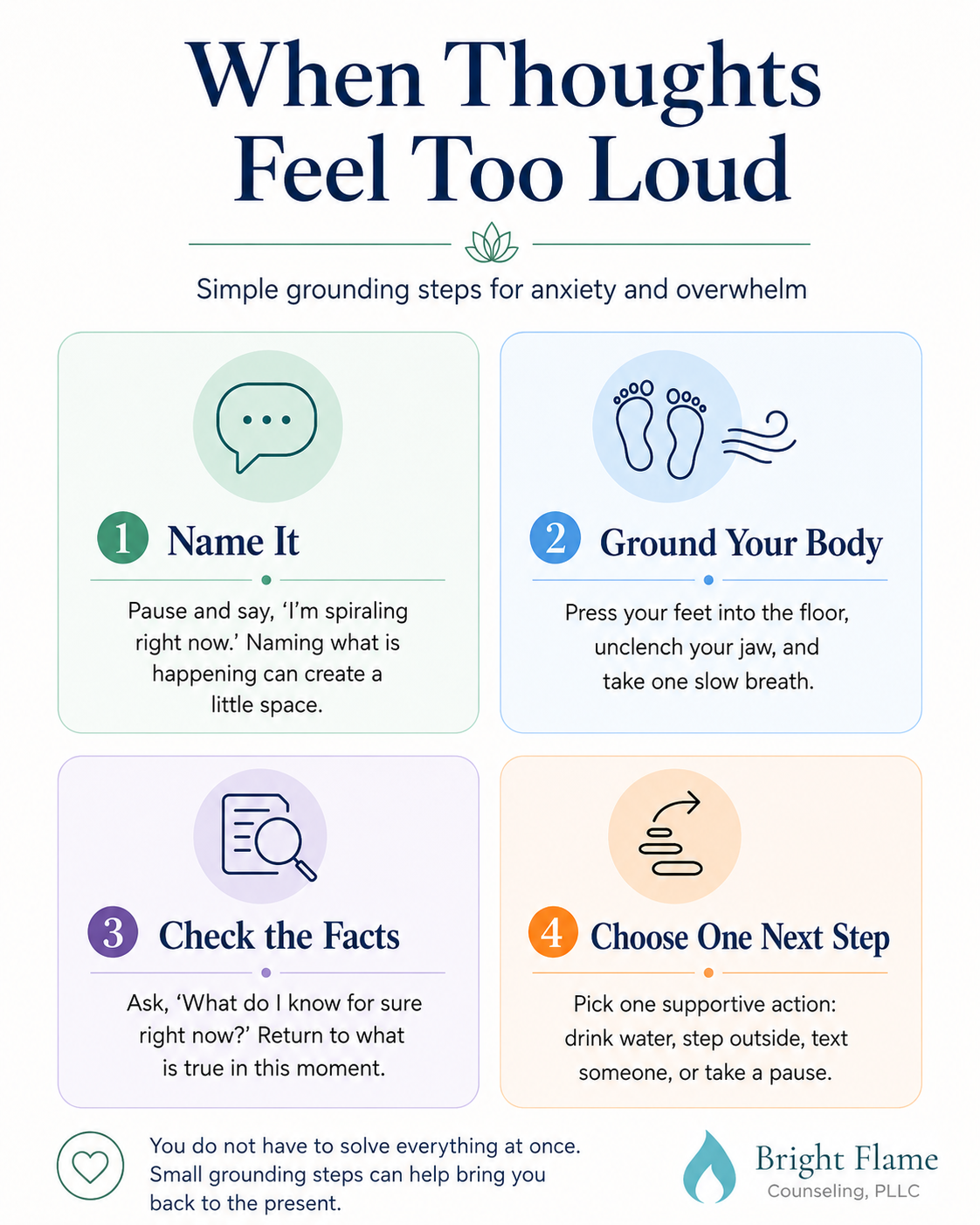
A helpful place to start is by naming what is happening: “I’m spiraling right now.” This small pause can create distance between you and the thoughts. You are not your thoughts; you are noticing them.
From there, try one of these grounding steps:
1. Come back to your body.
Take a slow breath, unclench your jaw, drop your shoulders, or place your feet firmly on the floor.
2. Use your senses.
Name five things you see, four things you feel, three things you hear, two things you smell, and one thing you taste.
3. Ask, “What do I know for sure?”
Spiraling often fills in the blanks with fear. Gently return to the facts you actually have.
4. Choose one small next step.
Instead of solving everything at once, ask, “What is the next supportive thing I can do?” This might be drinking water, sending one text, stepping outside, or taking a break.
5. Practice self-compassion.
Try saying, “This feels hard, and I can move through it one step at a time.”
Therapy can help you better understand your spirals, identify triggers, and build tools for emotional regulation. Approaches like CBT, DBT, ACT, and mindfulness-based therapy can support clients in noticing thought patterns, calming the nervous system, and responding with more intention.
You do not have to silence every thought to feel more grounded. Sometimes healing starts with learning how to lower the volume, reconnect with the present, and remind yourself that you are not alone in the spiral.
Disclaimer: This post is intended for general educational purposes and should not replace therapy, diagnosis, medical care, legal advice, or individualized treatment. Mental health information and best practices can change over time, so we encourage readers to consult with a qualified professional for the most current guidance and support specific to their situation. If you are experiencing a crisis or emergency, please call 988, 911, or visit the nearest emergency room.