Many people wonder if their struggles are “serious enough” for therapy. You might tell yourself that other people have it worse, that you should be able to handle it on your own, or that therapy is only for moments of crisis.
The truth is that therapy is not only for emergencies. Counseling can be a supportive space to better understand yourself, build coping skills, process difficult experiences, and feel less alone in what you are carrying.
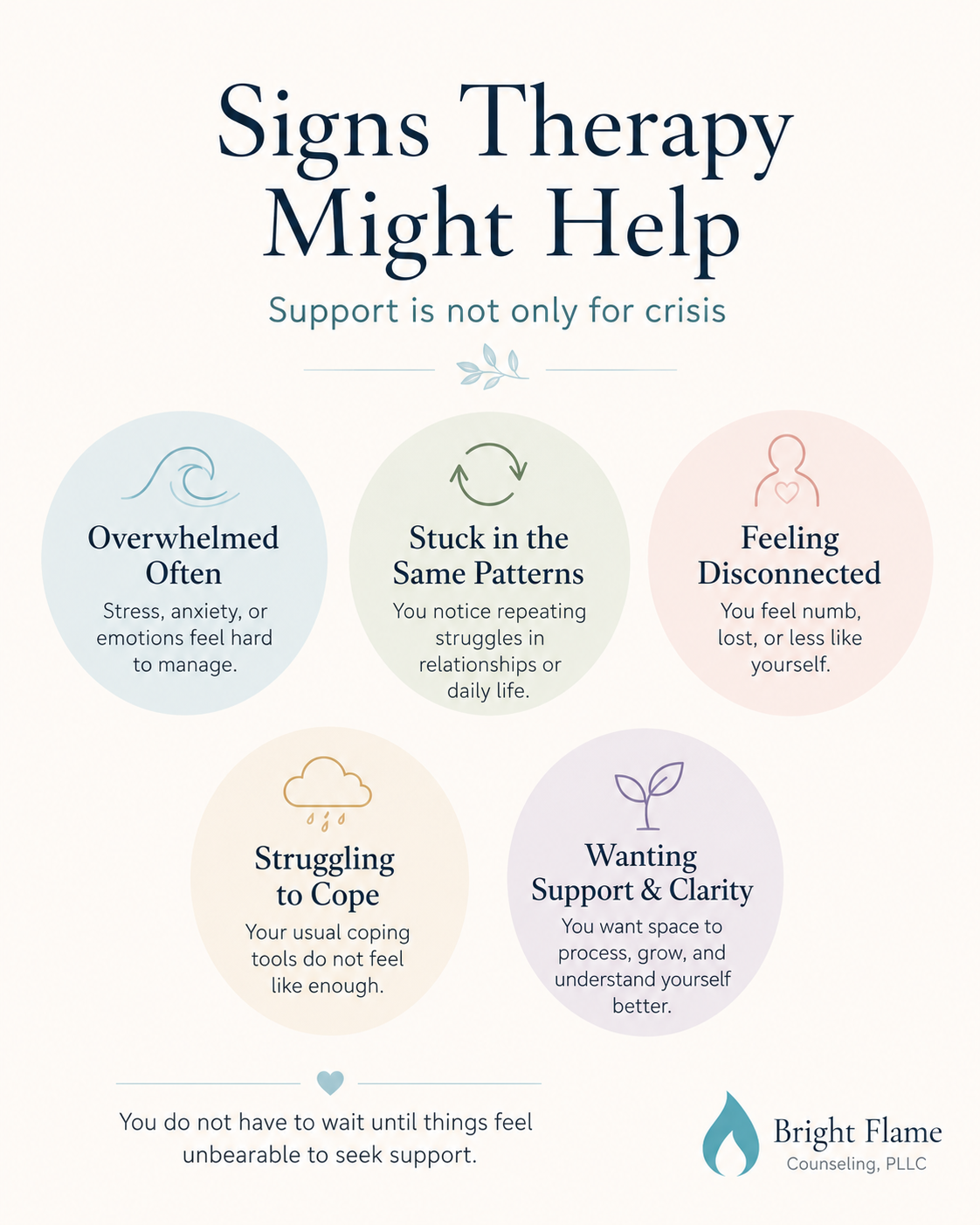
You might consider therapy if you feel overwhelmed often. This could look like anxiety, stress, sadness, irritability, or emotions that feel hard to manage. You do not have to wait until you are completely burned out to ask for support.
Therapy may also help if you feel stuck in the same patterns. Maybe you notice similar struggles showing up in relationships, work, family dynamics, or the way you talk to yourself. Therapy can help you slow down, identify what is happening, and practice new ways of responding.
Another sign therapy might be helpful is feeling disconnected from yourself. This can look like feeling numb, lost, exhausted, unsure of what you need, or like you are just moving through the day without feeling fully present.
You may also benefit from therapy if your usual coping tools do not feel like enough anymore. Sometimes the strategies that helped us survive one season of life stop working in another. Therapy can help you build new tools that fit who you are now.
It is also okay to start therapy simply because you want support and clarity. You do not need to have the “right” reason. Wanting space to process, grow, heal, or understand yourself better is enough.
Therapy is not about someone telling you what to do or judging your choices. At its best, therapy is collaborative, respectful, and grounded in your goals. It can be a place to explore what you are feeling, reconnect with your values, and move toward a life that feels more intentional and authentic.
You do not have to wait until things feel unbearable to seek support. If something feels heavy, confusing, repetitive, or hard to carry alone, therapy may be a meaningful place to begin.
Disclaimer: This post is intended for general educational purposes and should not replace therapy, diagnosis, medical care, legal advice, or individualized treatment. Mental health information and best practices can change over time, so we encourage readers to consult with a qualified professional for the most current guidance and support specific to their situation. If you are experiencing a crisis or emergency, please call 988, 911, or visit the nearest emergency room.